Americans trust the military and the police force significantly more than the church and organized religion, a new Gallup Poll says.
Only 46 percent of respondents said they had either a "great deal"
or "quite a lot" of confidence in the church, compared with 69 percent who said they trusted the military and 54 percent who trust police officers.
Read more on the Poll
Monday, June 25, 2007

Friday, June 22, 2007
Megachurches Desegregate Worship

The proliferation of congregations with over 2000 regular attendees has captured the attention of sociologists of religion and drawn criticism as de-personalizing forces (see video below). This Associated Press article presents them under a very positive light...
LEXINGTON, Mass. (AP) - Sundays at the evangelical Grace Chapel megachurch look like the American ideal of race relations: African-American, Haitian, white, Chinese and Korean families sing along with a white, guitar-playing pastor.
U.S. churches rarely have this kind of ethnic mix. But that's changing. Researchers who study race and religion say Grace Chapel is among a vanguard of megachurches that are breaking down racial barriers in American Christianity, altering the long-segregated landscape of Sunday worship.
"Megachurches as a whole are significantly better than other congregations at holding together multiracial, multiethnic congregations," said Scott Thumma, an expert on megachurches and a professor at Hartford Seminary in Connecticut. "It's absolutely clear."
A study by Thumma and the Leadership Network, a Dallas group that works with pioneering churches, found that minorities make up 20 percent or more of worshippers in nearly one-third of the nation's 1,200 megachurches. More than half of the megachurches say they are intentionally working to attract different ethnic groups, according to the 2005 study, part of a book that Thumma and network executive Dave Travis will publish in July.
The question now is whether the new diversity is just a fad or a permanent shift.
Although megachurches each draw at least 2,000 worshippers a week, they are a small percentage of the estimated 350,000 congregations across the United States. And leaders at Grace Chapel and other megachurches where whites remain the majority acknowledge enormous challenges in making minorities feel included so they'll stay for the long term.
Still, megachurches are trendsetters, and the change they've made is startling considering nearly all other American churches serve one ethnic group. Even churches with a large number of immigrants generally have separate English and non-English services. For black and white Christians, pre-Civil War church support for slavery and the general absence of white evangelicals from the civil rights movement continue to drive the two groups apart.
Most megachurches don't carry that historical burden; nearly all have been built since the 1970s and play down any ties to a denomination.
But that's not the main attraction.
Read More
Thursday, June 21, 2007
Lausanne III: Cape Town 2010

(4 May 2007) The Lausanne Committee for World Evangelization (LCWE) today announced plans for the International Congress on World Evangelization, to be held 16-25 October, 2010, in Cape Town, South Africa. Lausanne III: Cape Town 2010 will gather mission and church leaders from every part of the globe to address challenges and opportunities that are before the church with respect to world evangelization. Lausanne III will be held in partnership with the World Evangelical Alliance (WEA), whose leaders will participate in each dimension of the design and planning of the Congress. (Read More)
Monday, June 18, 2007
A Thought by Thomas Merton
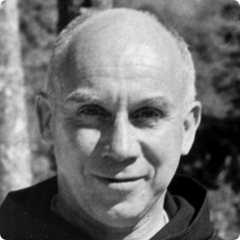
Prayer and meditation have an important part to play in opening up new ways and new horizons. If your prayer is the expression of a deep and grace-inspired desire for newness of life—and not the mere blind attachment to what has always been familiar and "safe"—God will act in us and through us to renew the Church by preparing, in prayer, what we cannot yet imagine or understand. In this way our prayer and faith today will be oriented toward the future which we ourselves may never see fully realized on earth.
From "Contemplation in a World of Action"
Saturday, June 16, 2007
A Current-er Prayer- By Cameron Semmens
Our media,
whose art is manipulation
hollow be thy game.
Thy cameras come, it will be done
on Nine as it is on Seven.
Give us this day our daily sensation,
and feed us our fears
as we feed the fear of others.
Lead us on with misinformation
and deliver us from thinking.
For thine is the king-maker
with the power of the story,
forever and ever,
amoral.
Friday, June 15, 2007
Europe’s Christian Comeback

A very interesting article by Philip Jenkins in the Foreign Policy web site...
The West is awash with fear of the Islamization of Europe. The rise of Islam, many warn, could transform the continent into “Eurabia,” a term popularized by Harvard historian Niall Ferguson and other pundits. “A youthful Muslim society to the south and east of the Mediterranean is poised to colonize—the term is not too strong—a senescent Europe,” Ferguson has predicted. Such grim prophecies may sell books, but they ignore reality. For all we hear about Islam, Europe remains a stronger Christian fortress than people realize. What’s more, it is showing little sign of giving ground to Islam or any other faith for that matter.
To be fair, the trend is counterintuitive. Europe has long been a malarial swamp for any traditional or orthodox faith. Compared with the rest of the world, religious adherence in Europe is painfully weak. And it is easy to find evidence of the decay. Any traveler to the continent has seen Christianity’s abandoned and secularized churches, many now transformed into little more than museums. But this does not mean that European Christianity is nearing extinction. Rather, among the ruins of faith, European Christianity is adapting to a world in which its convinced adherents represent a small but vigorous minority.
In fact, the rapid decline in the continent’s church attendance over the past 40 years may have done Europe a favor. It has freed churches of trying to operate as national entities that attempt to serve all members of society. Today, no church stands a realistic chance of incorporating everyone. Smaller, more focused bodies, however, can be more passionate, enthusiastic, and rigorously committed to personal holiness. To use a scientific analogy, when a star collapses, it becomes a white dwarf—smaller in size than it once was, but burning much more intensely. Across Europe, white-dwarf faith communities are growing within the remnants of the old mass church.
Perhaps nowhere is this more true than within European Catholicism, where new religious currents have become a potent force. Examples include movements such as the Focolare, the Emmanuel Community, and the Neocatechumenate Way, all of which are committed to a re-evangelization of Europe. These movements use charismatic styles of worship and devotion that would seem more at home in an American Pentecostal church, but at the same time they are thoroughly Catholic. Though most of these movements originated in Spain and Italy, they have subsequently spread throughout Europe and across the Catholic world. Their influence over the younger clergy and lay leaders who will shape the church in the next generation is surprisingly strong.
Similar trends are at work within the Protestant churches of Northern and Western Europe. The most active sections of the Church of England today are the evangelical and charismatic parishes that have, in effect, become megachurches in their own right. These parishes have been incredibly successful at reaching out to a secular society that no longer knows much of anything about the Christian faith. Holy Trinity Brompton, a megaparish in Knightsbridge, London, that is now one of Britain’s largest churches, is home to the amazingly popular “Alpha Course,” a means of recruiting potential converts through systems of informal networking aimed chiefly at young adults and professionals. As with the Catholic movements, the course works because it makes no assumptions about any prior knowledge: Everyone is assumed to be a new recruit in need of basic teaching. Nor does the recruitment technique assume that people live or work in traditional settings of family or employment. The Alpha Course is successfully geared for postmodern believers in a postindustrial economy.
Read the whole article
Thursday, June 14, 2007
População ficou mais parda, velha e evangélica de 1940 a 2000

Em 60 anos, de 1940 a 2000, o Brasil quadruplicou sua população, que ficou mais parda e velha. O país deixou de ser rural, ficou mais evangélico, e reduziu em cinco vezes a taxa de analfabetismo.
Os dados constam no estudo “Tendências demográficas: uma análise da população com base nos resultados dos Censos Demográficos de 1940 e 2000”, documento divulgado no final de maio pelo Instituto Brasileiro de Geografia e Estatística (IBGE).
A população do Brasil passou de 41,2 milhões de habitantes, em 1940, para 169,8 milhões em 2000. Influenciadas pelo processo de miscigenação racial, mais pessoas se declararam pardas no último Censo – 38,5% -, quando não passavam de 21,2% nos anos 40 do século passado.
Os evangélicos cresceram, no período, de 2,6% do total da população para 15,4%. O estudo mostrou uma expressiva redução de católicos romanos, de 95% para 73,6% da população. Os evangélicos se expandiram em todas as regiões do país, mas foi no Norte onde mais cresceram, sobrepujando a região Sul, que concentrava o maior rebanho, segundo o Censo de 1940.
Leia mais
Tuesday, June 12, 2007
Is Your Gospel Robust?

Here are some of Scott McKnight's thoughts during the recent Spiritual Formation Forum as related by the editors of Leadership Journal...
He called the standard evangelical gospel, outlined below, “right, but not right enough.” Essentially, we’ve watered down the good news in a way that has marginalized the church in God’s plan of redemption.
This fact was driven home recently by a friend of mine who teaches at a Christian college. He said a hand in the class went up in the middle of his lecture about the church and culture. The student, in all sincerity, asked, “Do we really need the church?” My friend was struck by the question, and by the fact that the classroom was filled with future church leaders. Something is amiss when even Christian leaders are questioning the necessity of the church. That something, according to McKnight, is the gospel we’ve been preaching.
Scot McKnight summarized the “Standard Gospel Presentation” this way:
God loves you and has a wonderful plan for your life.
Your problem is that you are sinful; God can’t admit sinners into his presence.
Jesus died for you to deal with you “sin-problem.”
If you trust in Christ, you can be admitted into God’s presence.
He went on to say that the problems with this popular evangelical gospel include:
1. No one in the New Testament really preaches this gospel.
2. This gospel is about one thing: humans gaining access to God’s presence.
3. This gospel creates and individualist Christian life.
Read More...
Wednesday, June 06, 2007
A "Radical" Thought by C.S. Lewis in Mere Christianity

This is the whole of Christianity. There is nothing else. It is so easy to get muddled about that. It is easy to think that the Church has a lot of different objectives -- education, building, missions, holding services. The Church exists for nothing else but to draw men into Christ, to make them little Christ's. If they are not doing that, all the cathedrals, clergy, missions, sermons, even the Bible itself, are simply a waste of time. God became Man for no other purpose. It is even doubtful, you know, whether the whole universe was created for any other purpose. It says in the Bible that the whole universe was made for Christ and that everything is to be gathered together in Him.
Wednesday, May 30, 2007
Ambidexterity as a Dynamic Capability: Resolving the Innovator's Dilemma

It seems to me that some of the insights of this Harvard Bussiness School paper could be useful for congregational re-development/transformation
Can organizations adapt and change—and if so, how does this occur? There are two major camps in the research on organizational change: those that argue for adaptation, and those that argue that as environments shift, inert organizations are replaced by new forms that better fit the changed context. There are data to support both arguments. This paper discusses the idea and practicality of ambidexterity and shows how the ability to simultaneously pursue emerging and mature strategies is a key element of long-term success. Key concepts include:
* Ambidexterity, the ability of a firm to simultaneously explore and exploit, is one solution to the innovator's dilemma as outlined by HBS professor Clayton Christensen.
* Under the appropriate conditions, organizations may be able to explore new avenues as well as exploit their existing capabilities.
* Strategic contradictions can be resolved by senior leaders who design and manage their own processes and, in turn, ambidextrous organizations. Leadership is therefore key.
Press here to read the paper
Monday, May 28, 2007
Evangelicals are 20% of Latin American's Population

In my lifetime I have seen the trajectory of protestants in Latin America from a persecuted minority to an increasingly influencial force in the area. I rejoice for it but along with David Martin (Emeritus Professor of Sociology at the London School of Economics) fear for the triumphalism that has come with the remarkable growth.
El movimiento evangélico ha provocado una "revolución religiosa" en América Latina. Se calcula que en la actualidad, el 20% de la población de la región es evangélica y su influencia sigue creciendo. Este incremento es visto con preocupación por la Iglesia Católica ya que la mitad de los más de 1.000 millones de católicos en el mundo vive en el continente.
¿Pero quiénes son los evangélicos? ¿Dónde se concentran? BBC Mundo le ofrece respuestas a éstas y otras preguntas claves sobre el movimiento evangélico en América Latina.
Lea aca el reporte de la BBC
Saturday, May 26, 2007
O Papa, Chavez e a "Cristianizacao" das Tribos

Benedict XVI was the aim of heavy criticism upon declaring in Sao Paulo that "the evangelization of the American continet did not, at any moment, promote the alienation of the pre-columbian cultures and was not an imposition of a foreign culture". Upon his return to Rome he did change his discourse to recognize the "pains" and "sufferings" of the natives peoples
Bento XVI disse que aconteceram ‘sofrimentos’ e ‘injustiças’ na colonização.
Antes, Papa recebera críticas principalmente de Hugo Chávez.
O Papa Bento XVI reconheceu nesta quarta-feira (23) que durante a colonização da América e de seus habitantes aconteceram com "sofrimentos" e "injustiças", ao fazer uma referência à recente viagem ao Brasil em sua audiência geral semanal.
"Não se pode ignorar as sombras que acompanharam a colonização da América Latina, nem esquecer os sofrimentos e as injustiças sofridas por seus habitantes", disse o Papa.
o dia 13 de maio, diante dos bispos da América Latina reunidos em Aparecida (Brasil), o Sumo Pontífice afirmara que a evangelização dos indígenas da América não implicou em nenhum momento uma alienação das culturas pré-colombianas e não impôs uma cultura estrangeira.
Bento XVI não mencionou as condições da evangelização, ao contrário de seu antecessor, João Paulo II, que em 1992, em Santo Domingo, pediu perdão às populações indígenas pelos atos de violência cometidos pelos cristãos na conquista da América.
A declaração provocou reações enérgicas dos representantes dos povos nativos. O presidente da Venezuela, Hugo Chávez, afirmou que a o Papa deveria pedir desculpas daquilo que chamou de holocausto indígena.
Confira o reporte da BBC
Friday, May 25, 2007
"Minority" Report

A look at California demographics according to US Census data...
The nation's minority population topped 100 million last year, about one-third of the total, and California had roughly 20 million minority residents, more than half of its total, according to new estimates from the U.S. Census Bureau.
Between the rising minority population -- particularly of Latinos of any race -- and the low median age of Latinos, a new kind of generation gap is arising across the country, experts said Wednesday: Most people over 60 are non-Hispanic whites, and most under 40 are not.
California starkly reflects this new gap. Non-Hispanic white people account for 63 percent of the state's residents age 60 and older. But the population under 40 is 38 percent Latino of any race, 13 percent Asian American, 8 percent black and just 39 percent non-Hispanic white.
Some demographers suspect the new generation gap will heighten the nation's struggle to provide adequate social services and public education.
"The biggest problems will be related to language and culture," said Andrew Scharlach, a professor of aging at UC Berkeley. "The difference may make it hard for nonwhite elders to take advantage of services for English-speaking white elders. There may also be problems in caretaking of white seniors by nonwhite providers."
Mark Mather, director of the Population Reference Bureau, a nonprofit in Washington, D.C., said researchers there found that states with the highest racial and ethnic diversity spend the least per pupil on education.
"It will be interesting to see if this new type of gap will affect funding for social programs and education spending for youth," he said.
The generation gap arises in part from a higher birth rate among Latino women, who average about three children compared to just under two children for non-Hispanic white, Asian and black people, said Hans Johnson, a demographer with the Public Policy Institute of California, in San Francisco. Mather said the chasm isn't likely to grow.
"We expect the gap to decline in the next 10 or 20 years with the aging of immigrants," Mather said.
Johnson agreed, noting that the immigration rate has been steady since the 1960s.
Latinos of any race were the fastest-growing minority group nationwide, reaching 44.2 million, up 3.4 percent from 2005, according to the annual estimates, which are being released to the public today. In California, Latinos also were the largest group, numbering 13.1 million, more than one-third of the state's total population.
Press here for the complete San Francisco Chronicle report
Friday, May 11, 2007
Is the Oldest Presbyterian Congregation in the US Purpose Driven?

This post may be outrageously distateful to some while refreshing to others. Anyway, I could not help but be surprised by reading about First Presbyterian Church of Jamaica...
One way First Presbyterian [Church of Jamaica] has achieved a larger congregation in the last several years is through adopting the Purpose Driven Model, an approach popularized by Rick Warren, the author of the best-selling book, “The Purpose-Driven Life.”
O’Connor [Senior Pastor] said by preaching that every individual is designed for a specific purpose that he or she can discover, he has been able to attract more people to church services.
“All people want to know their lives are lived in significance. That was a connection that was made,” he said.
Willingness to devise new methods of bringing faith to people is essential, he said.
However, 345 years later, First Church’s message remains the same.
“It’s a place where people are loved and welcomed,” he said. “ You can come as you are.”
Press Here to read the complete Queens Tribune Report
Friday, May 04, 2007
Antelope Valley cities hot spots for 2006 growth

BY JIM SKEEN, Daily News Staff Writer
ANTELOPE VALLEY - Lancaster's population increased by 3.8 percent last year and Palmdale's by 3 percent, making them among the fastest-growing cities in Los Angeles County, according to state population statistics released this week.
Although Lancaster grew at a faster rate, Palmdale retained its position as the largest city in the Antelope Valley, growing from 141,199 people to 145, 468. Lancaster's population increased to 143,818 people, up from 138,562, according to the state Department of Finance.
"It helps out our real estate industry, because people are buying homes, and it helps out our business community," Palmdale Councilman Mike Dispenza said. "As far as services, we're not so stretched that we can't absorb 4,000 or 5,000 people."
Although housing sales have slowed from the furious pace of a year or two ago, there are still eager prospective buyers, Palmdale officials said. Palmdale is seeing interest in housing on its east side, and two large master-planned communities are under construction on the west side: the 5,000-home Anaverde and the 7,200-home Ritter Ranch.
Press here to read the whole daily news report
Thursday, April 26, 2007
Hispanics Transforming Nation's Religious Landscape
By Adelle M. Banks
Religion News Service
About half the nation's Hispanics -- including many who are Roman Catholic -- consider themselves to be charismatics or Pentecostals, creating a new confluence of streams in American Christianity.
"Simply put, Latinos are transforming the nation's religious landscape," said Roberto Suro, director of the Pew Hispanic Center, one of two organizations that produced a new study.
The survey and accompanying report, released Wednesday (April 25), found that 68 percent -- or two-thirds -- of Hispanics describe themselves as Roman Catholics while 15 percent are evangelical or born-again Protestants. Eight percent do not identify with a religion.
A joint project of the Pew Hispanic Center and the Pew Forum on Religion & Public Life, the report details results of a bilingual telephone survey of 4,016 Hispanic adults between August and October of 2006. It has a margin of error of plus or minus 2.5 percentage points.
The religious practice of Hispanics -- across religious persuasions -- is a daily, active one, researchers found. Seventy percent of all Hispanics have a crucifix or other religious object in their home. And 58 percent pray to the Virgin Mary or saints at difficult times.
Among Latino Christians:
-- 75 percent believe in miracles
-- 71 percent say religion is very important
-- 70 percent pray every day
-- 53 percent believe the Bible is the literal word of God
-- 52 percent believe Jesus will return in their lifetime
-- 47 percent attend church at least weekly
-- 29 percent speak in tongues at least weekly
Hispanic Catholics are four times as likely as non-Hispanic Catholics to describe themselves as charismatic, but they do not discard traditional Catholic teaching, the report notes. Instead they incorporate charismatic practices into their religious life.
Press here for the Beliefnet report
Wednesday, April 25, 2007
Our Coat of Arms/ Nuestros Escudos

On our 10th wedding anniversary/En nuestro decimo aniversario de bodas
Boom in Third World Christianity transforms middle-class American church
The Associated Press
Tucson, Arizona | Published: 04.25.2007
The United Methodist Church is the latest Protestant group caught in the shifting currents of world Christianity. While the American denomination is shrinking at home, its congregations in the developing world are growing explosively.
Over the last decade, the number of United Methodists outside the U.S. more than tripled. The denomination's largest district is now in the West African nation of Ivory Coast. At the next national church assembly, the 2008 General Conference in Texas, overseas delegates will have more say than ever in the church's future — as many as 30 percent could come from abroad.
"Trends suggest that Christianity is going to continue to grow as a global phenomenon, and denominations that have thought of themselves as being predominantly North American in character are going to have to get over that," said William Lawrence, dean of the Perkins School of Theology, a Methodist seminary in Dallas.
Nearly 8 million United Methodists are now in the U.S., with another 3.5 million church members overseas. The denomination is the third-largest in the nation behind Roman Catholics and Southern Baptists, and middle-class worshippers mostly fill the pews of its American churches.
But if current patterns continue, within decades the typical United Methodist will be from Africa. While international congregations expand, the denomination's U.S. ranks have decreased by 19 percent since the 1970s.
Press here to read the whole report
Thursday, April 19, 2007
Prayer in the wake of the Virginia Tech Tragedy

I wanted to share this prayer written by Rev. Dr. Mark Roberts who is pastor of Irvine Presbyterian Church and was my New Testament professor at San Francisco Theological Seminary
God of love and justice, our hearts are stunned today by the horrifying events at Virginia Tech. We struggle even to know how to pray. Yet we ask You, above all, to let Your gracious presence be known to all who suffer this day, especially the families and friends of those who have died. Grant them Your peace that passes all understanding. Help us, dear Lord, to learn what we must learn from this crisis. Give us hearts open to You. Keep us from using the pain of others to manipulate or callously advance our personal agendas. Help us to listen to each other, and most of all to You. Thank You for being a God who is not watching us from a distance. Thank You for entering into the pain and sorrow of this broken world. Thank You for being present with us when we suffer. Thank You for giving us hope when all seems hopeless, through Christ our Lord. Amen.
Subscribe to:
Posts (Atom)