The recent statement of Benedict XVI statement brought swift criticism from Protestant leaders. "It makes us question whether we are indeed praying together for Christian unity," said the World Alliance of Reformed Churches, a fellowship of 75 million Protestants in more than 100 countries.
Click here to read the Associated Press Article
Wednesday, July 11, 2007

Tuesday, July 10, 2007
A Multi-Colored Future for the Golden State

The number of people in California, already the most populous U.S. state, will rise to 60 million by 2050 from 36 million now, and Hispanics will be in the majority by 2042, a state report released on Monday forecast. What are the implication of those realities for mission on this fascinating part of God's world?
Read the Reuters report here
Saturday, July 07, 2007
A Bear in Trouble
Un osito se subio a uno de los postes de la ciudad donde vivimos y no se podia bajar
Why the Church?

An excerpt from "It Takes a Church to Raise a Christian". By Dr. Tod Bolsinger. Pastor at San Clemente Presbyterian Church
For most Christians, the local church is usually regarded as nothing more than a personally helpful but basically benign reality. Oh, sure, we honor the Church the way we honor our Mother’s on Mother’s Day or Veteran’s on Veteran’s day—because we have some genuine affection and mostly because we think it is the right thing to do. The more traditional of us, may even use exalted language in declaring it a "means of grace." But most often we think of the Church as nothing more than an optional "strategy" or a "system" for local evangelistic efforts, social change, or a dispenser of resources to help the individual on his or her Christian journey. Churches are offered like different shops are offered at a mall. Indeed, the largest churches offer themselves as a kind of spiritual mall in itself, bidding the seeker: Come here and choose from our wide array of Christian classes, teachings, activities, that which you need to live out your individual Christian life.
In this model the church is a repository of spiritual goods that assist the individual Christian. It is a vendor of religious services. It is The Home Depot for the spiritual do-it-yourselfer who wants to build a Christian home.
But that is not the Church of the first century. The Church of the first century is “a people.” And the transformed and transforming quality of “the people” serving as the flesh and blood witness to a life-transforming God is the point. As 1 Peter 2:9-10 says:
"You are a chosen people. You are a kingdom of priests, God's holy nation, his very own possession. This is so you can show others the goodness of God, for he called you out of the darkness into his wonderful life.
Once you were not a people;
now you are the people of God.
Once you received none of God's mercy;
now you have received mercy." (NLT)
This is what the Bible teaches: The Church is God's incarnation today. The Church is Jesus' body on earth. The Church is the temple of the Spirit. The Church is not a helpful thing for my individual spiritual journey. The Church is the journey. The Church is not a collection of “soul-winners” all seeking to tell unbelievers “the Way” to God. The Church is the Way. To be part of the Church is to be part of God—to be part of God’s Communion and to be part of God’s ministry. To belong to the people of God is to enjoy relationship with God and live out the purposes of God. This is why the Church is the only true means to be transformed into the likeness of God.
Thursday, July 05, 2007
On Knowing and Being Known

Globally, the vast majority of the world’s non-Christians have relatively little contact with Christians. In fact, more than 86 percent of all Buddhists, Hindus, and Muslims do not even know a Christian. According to the Center for the Study of Global Christianity, more than 80 percent of all non-Christians do not personally know a Christian.
Read Dr. James Emery White's article
Tuesday, July 03, 2007
Traveling as a Mission Paradigm

I wanted to share an interview with Duke Divinity School professor Emmanuel Katongole in which he offers a new paradigm for missions. These words resonated with me...
"Being an immigrant can be a blessing. God's mission, as I read it in 2 Corinthians 5:17, is new creation. God is reconciling the world to himself. And there is a sense of journey that is connected with that. When, later on, Paul says that "we are ambassadors of God's reconciliation, God is appealing through us," he is inviting us into a journey toward a new kind of community. People looking at Christians should be confused. Who are these people? Are they black? Are they white? Are they Americans? Are they Ugandans? In Revelation, John sees people drawn from all languages and tribes and nations: an unprecedented congregation. Living on three continents has deepened my understanding of the church as such a congregation; at the same time, it has heightened my sense of Christian life as a journey and of what it means to live as a pilgrim, a resident alien"
Check out the entire Christianity Today interview
Monday, June 25, 2007
Trust in Organized Religion at Near-Record Low
Americans trust the military and the police force significantly more than the church and organized religion, a new Gallup Poll says.
Only 46 percent of respondents said they had either a "great deal"
or "quite a lot" of confidence in the church, compared with 69 percent who said they trusted the military and 54 percent who trust police officers.
Read more on the Poll
Only 46 percent of respondents said they had either a "great deal"
or "quite a lot" of confidence in the church, compared with 69 percent who said they trusted the military and 54 percent who trust police officers.
Read more on the Poll
Friday, June 22, 2007
Megachurches Desegregate Worship

The proliferation of congregations with over 2000 regular attendees has captured the attention of sociologists of religion and drawn criticism as de-personalizing forces (see video below). This Associated Press article presents them under a very positive light...
LEXINGTON, Mass. (AP) - Sundays at the evangelical Grace Chapel megachurch look like the American ideal of race relations: African-American, Haitian, white, Chinese and Korean families sing along with a white, guitar-playing pastor.
U.S. churches rarely have this kind of ethnic mix. But that's changing. Researchers who study race and religion say Grace Chapel is among a vanguard of megachurches that are breaking down racial barriers in American Christianity, altering the long-segregated landscape of Sunday worship.
"Megachurches as a whole are significantly better than other congregations at holding together multiracial, multiethnic congregations," said Scott Thumma, an expert on megachurches and a professor at Hartford Seminary in Connecticut. "It's absolutely clear."
A study by Thumma and the Leadership Network, a Dallas group that works with pioneering churches, found that minorities make up 20 percent or more of worshippers in nearly one-third of the nation's 1,200 megachurches. More than half of the megachurches say they are intentionally working to attract different ethnic groups, according to the 2005 study, part of a book that Thumma and network executive Dave Travis will publish in July.
The question now is whether the new diversity is just a fad or a permanent shift.
Although megachurches each draw at least 2,000 worshippers a week, they are a small percentage of the estimated 350,000 congregations across the United States. And leaders at Grace Chapel and other megachurches where whites remain the majority acknowledge enormous challenges in making minorities feel included so they'll stay for the long term.
Still, megachurches are trendsetters, and the change they've made is startling considering nearly all other American churches serve one ethnic group. Even churches with a large number of immigrants generally have separate English and non-English services. For black and white Christians, pre-Civil War church support for slavery and the general absence of white evangelicals from the civil rights movement continue to drive the two groups apart.
Most megachurches don't carry that historical burden; nearly all have been built since the 1970s and play down any ties to a denomination.
But that's not the main attraction.
Read More
Thursday, June 21, 2007
Lausanne III: Cape Town 2010

(4 May 2007) The Lausanne Committee for World Evangelization (LCWE) today announced plans for the International Congress on World Evangelization, to be held 16-25 October, 2010, in Cape Town, South Africa. Lausanne III: Cape Town 2010 will gather mission and church leaders from every part of the globe to address challenges and opportunities that are before the church with respect to world evangelization. Lausanne III will be held in partnership with the World Evangelical Alliance (WEA), whose leaders will participate in each dimension of the design and planning of the Congress. (Read More)
Monday, June 18, 2007
A Thought by Thomas Merton
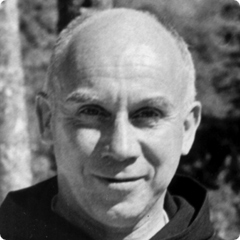
Prayer and meditation have an important part to play in opening up new ways and new horizons. If your prayer is the expression of a deep and grace-inspired desire for newness of life—and not the mere blind attachment to what has always been familiar and "safe"—God will act in us and through us to renew the Church by preparing, in prayer, what we cannot yet imagine or understand. In this way our prayer and faith today will be oriented toward the future which we ourselves may never see fully realized on earth.
From "Contemplation in a World of Action"
Saturday, June 16, 2007
A Current-er Prayer- By Cameron Semmens
Our media,
whose art is manipulation
hollow be thy game.
Thy cameras come, it will be done
on Nine as it is on Seven.
Give us this day our daily sensation,
and feed us our fears
as we feed the fear of others.
Lead us on with misinformation
and deliver us from thinking.
For thine is the king-maker
with the power of the story,
forever and ever,
amoral.
whose art is manipulation
hollow be thy game.
Thy cameras come, it will be done
on Nine as it is on Seven.
Give us this day our daily sensation,
and feed us our fears
as we feed the fear of others.
Lead us on with misinformation
and deliver us from thinking.
For thine is the king-maker
with the power of the story,
forever and ever,
amoral.
Friday, June 15, 2007
Europe’s Christian Comeback

A very interesting article by Philip Jenkins in the Foreign Policy web site...
The West is awash with fear of the Islamization of Europe. The rise of Islam, many warn, could transform the continent into “Eurabia,” a term popularized by Harvard historian Niall Ferguson and other pundits. “A youthful Muslim society to the south and east of the Mediterranean is poised to colonize—the term is not too strong—a senescent Europe,” Ferguson has predicted. Such grim prophecies may sell books, but they ignore reality. For all we hear about Islam, Europe remains a stronger Christian fortress than people realize. What’s more, it is showing little sign of giving ground to Islam or any other faith for that matter.
To be fair, the trend is counterintuitive. Europe has long been a malarial swamp for any traditional or orthodox faith. Compared with the rest of the world, religious adherence in Europe is painfully weak. And it is easy to find evidence of the decay. Any traveler to the continent has seen Christianity’s abandoned and secularized churches, many now transformed into little more than museums. But this does not mean that European Christianity is nearing extinction. Rather, among the ruins of faith, European Christianity is adapting to a world in which its convinced adherents represent a small but vigorous minority.
In fact, the rapid decline in the continent’s church attendance over the past 40 years may have done Europe a favor. It has freed churches of trying to operate as national entities that attempt to serve all members of society. Today, no church stands a realistic chance of incorporating everyone. Smaller, more focused bodies, however, can be more passionate, enthusiastic, and rigorously committed to personal holiness. To use a scientific analogy, when a star collapses, it becomes a white dwarf—smaller in size than it once was, but burning much more intensely. Across Europe, white-dwarf faith communities are growing within the remnants of the old mass church.
Perhaps nowhere is this more true than within European Catholicism, where new religious currents have become a potent force. Examples include movements such as the Focolare, the Emmanuel Community, and the Neocatechumenate Way, all of which are committed to a re-evangelization of Europe. These movements use charismatic styles of worship and devotion that would seem more at home in an American Pentecostal church, but at the same time they are thoroughly Catholic. Though most of these movements originated in Spain and Italy, they have subsequently spread throughout Europe and across the Catholic world. Their influence over the younger clergy and lay leaders who will shape the church in the next generation is surprisingly strong.
Similar trends are at work within the Protestant churches of Northern and Western Europe. The most active sections of the Church of England today are the evangelical and charismatic parishes that have, in effect, become megachurches in their own right. These parishes have been incredibly successful at reaching out to a secular society that no longer knows much of anything about the Christian faith. Holy Trinity Brompton, a megaparish in Knightsbridge, London, that is now one of Britain’s largest churches, is home to the amazingly popular “Alpha Course,” a means of recruiting potential converts through systems of informal networking aimed chiefly at young adults and professionals. As with the Catholic movements, the course works because it makes no assumptions about any prior knowledge: Everyone is assumed to be a new recruit in need of basic teaching. Nor does the recruitment technique assume that people live or work in traditional settings of family or employment. The Alpha Course is successfully geared for postmodern believers in a postindustrial economy.
Read the whole article
Thursday, June 14, 2007
População ficou mais parda, velha e evangélica de 1940 a 2000

Em 60 anos, de 1940 a 2000, o Brasil quadruplicou sua população, que ficou mais parda e velha. O país deixou de ser rural, ficou mais evangélico, e reduziu em cinco vezes a taxa de analfabetismo.
Os dados constam no estudo “Tendências demográficas: uma análise da população com base nos resultados dos Censos Demográficos de 1940 e 2000”, documento divulgado no final de maio pelo Instituto Brasileiro de Geografia e Estatística (IBGE).
A população do Brasil passou de 41,2 milhões de habitantes, em 1940, para 169,8 milhões em 2000. Influenciadas pelo processo de miscigenação racial, mais pessoas se declararam pardas no último Censo – 38,5% -, quando não passavam de 21,2% nos anos 40 do século passado.
Os evangélicos cresceram, no período, de 2,6% do total da população para 15,4%. O estudo mostrou uma expressiva redução de católicos romanos, de 95% para 73,6% da população. Os evangélicos se expandiram em todas as regiões do país, mas foi no Norte onde mais cresceram, sobrepujando a região Sul, que concentrava o maior rebanho, segundo o Censo de 1940.
Leia mais
Tuesday, June 12, 2007
Is Your Gospel Robust?

Here are some of Scott McKnight's thoughts during the recent Spiritual Formation Forum as related by the editors of Leadership Journal...
He called the standard evangelical gospel, outlined below, “right, but not right enough.” Essentially, we’ve watered down the good news in a way that has marginalized the church in God’s plan of redemption.
This fact was driven home recently by a friend of mine who teaches at a Christian college. He said a hand in the class went up in the middle of his lecture about the church and culture. The student, in all sincerity, asked, “Do we really need the church?” My friend was struck by the question, and by the fact that the classroom was filled with future church leaders. Something is amiss when even Christian leaders are questioning the necessity of the church. That something, according to McKnight, is the gospel we’ve been preaching.
Scot McKnight summarized the “Standard Gospel Presentation” this way:
God loves you and has a wonderful plan for your life.
Your problem is that you are sinful; God can’t admit sinners into his presence.
Jesus died for you to deal with you “sin-problem.”
If you trust in Christ, you can be admitted into God’s presence.
He went on to say that the problems with this popular evangelical gospel include:
1. No one in the New Testament really preaches this gospel.
2. This gospel is about one thing: humans gaining access to God’s presence.
3. This gospel creates and individualist Christian life.
Read More...
Wednesday, June 06, 2007
A "Radical" Thought by C.S. Lewis in Mere Christianity

This is the whole of Christianity. There is nothing else. It is so easy to get muddled about that. It is easy to think that the Church has a lot of different objectives -- education, building, missions, holding services. The Church exists for nothing else but to draw men into Christ, to make them little Christ's. If they are not doing that, all the cathedrals, clergy, missions, sermons, even the Bible itself, are simply a waste of time. God became Man for no other purpose. It is even doubtful, you know, whether the whole universe was created for any other purpose. It says in the Bible that the whole universe was made for Christ and that everything is to be gathered together in Him.
Wednesday, May 30, 2007
Ambidexterity as a Dynamic Capability: Resolving the Innovator's Dilemma

It seems to me that some of the insights of this Harvard Bussiness School paper could be useful for congregational re-development/transformation
Can organizations adapt and change—and if so, how does this occur? There are two major camps in the research on organizational change: those that argue for adaptation, and those that argue that as environments shift, inert organizations are replaced by new forms that better fit the changed context. There are data to support both arguments. This paper discusses the idea and practicality of ambidexterity and shows how the ability to simultaneously pursue emerging and mature strategies is a key element of long-term success. Key concepts include:
* Ambidexterity, the ability of a firm to simultaneously explore and exploit, is one solution to the innovator's dilemma as outlined by HBS professor Clayton Christensen.
* Under the appropriate conditions, organizations may be able to explore new avenues as well as exploit their existing capabilities.
* Strategic contradictions can be resolved by senior leaders who design and manage their own processes and, in turn, ambidextrous organizations. Leadership is therefore key.
Press here to read the paper
Monday, May 28, 2007
Evangelicals are 20% of Latin American's Population

In my lifetime I have seen the trajectory of protestants in Latin America from a persecuted minority to an increasingly influencial force in the area. I rejoice for it but along with David Martin (Emeritus Professor of Sociology at the London School of Economics) fear for the triumphalism that has come with the remarkable growth.
El movimiento evangélico ha provocado una "revolución religiosa" en América Latina. Se calcula que en la actualidad, el 20% de la población de la región es evangélica y su influencia sigue creciendo. Este incremento es visto con preocupación por la Iglesia Católica ya que la mitad de los más de 1.000 millones de católicos en el mundo vive en el continente.
¿Pero quiénes son los evangélicos? ¿Dónde se concentran? BBC Mundo le ofrece respuestas a éstas y otras preguntas claves sobre el movimiento evangélico en América Latina.
Lea aca el reporte de la BBC
Saturday, May 26, 2007
O Papa, Chavez e a "Cristianizacao" das Tribos

Benedict XVI was the aim of heavy criticism upon declaring in Sao Paulo that "the evangelization of the American continet did not, at any moment, promote the alienation of the pre-columbian cultures and was not an imposition of a foreign culture". Upon his return to Rome he did change his discourse to recognize the "pains" and "sufferings" of the natives peoples
Bento XVI disse que aconteceram ‘sofrimentos’ e ‘injustiças’ na colonização.
Antes, Papa recebera críticas principalmente de Hugo Chávez.
O Papa Bento XVI reconheceu nesta quarta-feira (23) que durante a colonização da América e de seus habitantes aconteceram com "sofrimentos" e "injustiças", ao fazer uma referência à recente viagem ao Brasil em sua audiência geral semanal.
"Não se pode ignorar as sombras que acompanharam a colonização da América Latina, nem esquecer os sofrimentos e as injustiças sofridas por seus habitantes", disse o Papa.
o dia 13 de maio, diante dos bispos da América Latina reunidos em Aparecida (Brasil), o Sumo Pontífice afirmara que a evangelização dos indígenas da América não implicou em nenhum momento uma alienação das culturas pré-colombianas e não impôs uma cultura estrangeira.
Bento XVI não mencionou as condições da evangelização, ao contrário de seu antecessor, João Paulo II, que em 1992, em Santo Domingo, pediu perdão às populações indígenas pelos atos de violência cometidos pelos cristãos na conquista da América.
A declaração provocou reações enérgicas dos representantes dos povos nativos. O presidente da Venezuela, Hugo Chávez, afirmou que a o Papa deveria pedir desculpas daquilo que chamou de holocausto indígena.
Confira o reporte da BBC
Friday, May 25, 2007
"Minority" Report

A look at California demographics according to US Census data...
The nation's minority population topped 100 million last year, about one-third of the total, and California had roughly 20 million minority residents, more than half of its total, according to new estimates from the U.S. Census Bureau.
Between the rising minority population -- particularly of Latinos of any race -- and the low median age of Latinos, a new kind of generation gap is arising across the country, experts said Wednesday: Most people over 60 are non-Hispanic whites, and most under 40 are not.
California starkly reflects this new gap. Non-Hispanic white people account for 63 percent of the state's residents age 60 and older. But the population under 40 is 38 percent Latino of any race, 13 percent Asian American, 8 percent black and just 39 percent non-Hispanic white.
Some demographers suspect the new generation gap will heighten the nation's struggle to provide adequate social services and public education.
"The biggest problems will be related to language and culture," said Andrew Scharlach, a professor of aging at UC Berkeley. "The difference may make it hard for nonwhite elders to take advantage of services for English-speaking white elders. There may also be problems in caretaking of white seniors by nonwhite providers."
Mark Mather, director of the Population Reference Bureau, a nonprofit in Washington, D.C., said researchers there found that states with the highest racial and ethnic diversity spend the least per pupil on education.
"It will be interesting to see if this new type of gap will affect funding for social programs and education spending for youth," he said.
The generation gap arises in part from a higher birth rate among Latino women, who average about three children compared to just under two children for non-Hispanic white, Asian and black people, said Hans Johnson, a demographer with the Public Policy Institute of California, in San Francisco. Mather said the chasm isn't likely to grow.
"We expect the gap to decline in the next 10 or 20 years with the aging of immigrants," Mather said.
Johnson agreed, noting that the immigration rate has been steady since the 1960s.
Latinos of any race were the fastest-growing minority group nationwide, reaching 44.2 million, up 3.4 percent from 2005, according to the annual estimates, which are being released to the public today. In California, Latinos also were the largest group, numbering 13.1 million, more than one-third of the state's total population.
Press here for the complete San Francisco Chronicle report
Friday, May 11, 2007
Is the Oldest Presbyterian Congregation in the US Purpose Driven?

This post may be outrageously distateful to some while refreshing to others. Anyway, I could not help but be surprised by reading about First Presbyterian Church of Jamaica...
One way First Presbyterian [Church of Jamaica] has achieved a larger congregation in the last several years is through adopting the Purpose Driven Model, an approach popularized by Rick Warren, the author of the best-selling book, “The Purpose-Driven Life.”
O’Connor [Senior Pastor] said by preaching that every individual is designed for a specific purpose that he or she can discover, he has been able to attract more people to church services.
“All people want to know their lives are lived in significance. That was a connection that was made,” he said.
Willingness to devise new methods of bringing faith to people is essential, he said.
However, 345 years later, First Church’s message remains the same.
“It’s a place where people are loved and welcomed,” he said. “ You can come as you are.”
Press Here to read the complete Queens Tribune Report
Friday, May 04, 2007
Antelope Valley cities hot spots for 2006 growth

BY JIM SKEEN, Daily News Staff Writer
ANTELOPE VALLEY - Lancaster's population increased by 3.8 percent last year and Palmdale's by 3 percent, making them among the fastest-growing cities in Los Angeles County, according to state population statistics released this week.
Although Lancaster grew at a faster rate, Palmdale retained its position as the largest city in the Antelope Valley, growing from 141,199 people to 145, 468. Lancaster's population increased to 143,818 people, up from 138,562, according to the state Department of Finance.
"It helps out our real estate industry, because people are buying homes, and it helps out our business community," Palmdale Councilman Mike Dispenza said. "As far as services, we're not so stretched that we can't absorb 4,000 or 5,000 people."
Although housing sales have slowed from the furious pace of a year or two ago, there are still eager prospective buyers, Palmdale officials said. Palmdale is seeing interest in housing on its east side, and two large master-planned communities are under construction on the west side: the 5,000-home Anaverde and the 7,200-home Ritter Ranch.
Press here to read the whole daily news report
Thursday, April 26, 2007
Hispanics Transforming Nation's Religious Landscape
By Adelle M. Banks
Religion News Service
About half the nation's Hispanics -- including many who are Roman Catholic -- consider themselves to be charismatics or Pentecostals, creating a new confluence of streams in American Christianity.
"Simply put, Latinos are transforming the nation's religious landscape," said Roberto Suro, director of the Pew Hispanic Center, one of two organizations that produced a new study.
The survey and accompanying report, released Wednesday (April 25), found that 68 percent -- or two-thirds -- of Hispanics describe themselves as Roman Catholics while 15 percent are evangelical or born-again Protestants. Eight percent do not identify with a religion.
A joint project of the Pew Hispanic Center and the Pew Forum on Religion & Public Life, the report details results of a bilingual telephone survey of 4,016 Hispanic adults between August and October of 2006. It has a margin of error of plus or minus 2.5 percentage points.
The religious practice of Hispanics -- across religious persuasions -- is a daily, active one, researchers found. Seventy percent of all Hispanics have a crucifix or other religious object in their home. And 58 percent pray to the Virgin Mary or saints at difficult times.
Among Latino Christians:
-- 75 percent believe in miracles
-- 71 percent say religion is very important
-- 70 percent pray every day
-- 53 percent believe the Bible is the literal word of God
-- 52 percent believe Jesus will return in their lifetime
-- 47 percent attend church at least weekly
-- 29 percent speak in tongues at least weekly
Hispanic Catholics are four times as likely as non-Hispanic Catholics to describe themselves as charismatic, but they do not discard traditional Catholic teaching, the report notes. Instead they incorporate charismatic practices into their religious life.
Press here for the Beliefnet report
Religion News Service
About half the nation's Hispanics -- including many who are Roman Catholic -- consider themselves to be charismatics or Pentecostals, creating a new confluence of streams in American Christianity.
"Simply put, Latinos are transforming the nation's religious landscape," said Roberto Suro, director of the Pew Hispanic Center, one of two organizations that produced a new study.
The survey and accompanying report, released Wednesday (April 25), found that 68 percent -- or two-thirds -- of Hispanics describe themselves as Roman Catholics while 15 percent are evangelical or born-again Protestants. Eight percent do not identify with a religion.
A joint project of the Pew Hispanic Center and the Pew Forum on Religion & Public Life, the report details results of a bilingual telephone survey of 4,016 Hispanic adults between August and October of 2006. It has a margin of error of plus or minus 2.5 percentage points.
The religious practice of Hispanics -- across religious persuasions -- is a daily, active one, researchers found. Seventy percent of all Hispanics have a crucifix or other religious object in their home. And 58 percent pray to the Virgin Mary or saints at difficult times.
Among Latino Christians:
-- 75 percent believe in miracles
-- 71 percent say religion is very important
-- 70 percent pray every day
-- 53 percent believe the Bible is the literal word of God
-- 52 percent believe Jesus will return in their lifetime
-- 47 percent attend church at least weekly
-- 29 percent speak in tongues at least weekly
Hispanic Catholics are four times as likely as non-Hispanic Catholics to describe themselves as charismatic, but they do not discard traditional Catholic teaching, the report notes. Instead they incorporate charismatic practices into their religious life.
Press here for the Beliefnet report
Wednesday, April 25, 2007
Our Coat of Arms/ Nuestros Escudos

On our 10th wedding anniversary/En nuestro decimo aniversario de bodas
Boom in Third World Christianity transforms middle-class American church
The Associated Press
Tucson, Arizona | Published: 04.25.2007
The United Methodist Church is the latest Protestant group caught in the shifting currents of world Christianity. While the American denomination is shrinking at home, its congregations in the developing world are growing explosively.
Over the last decade, the number of United Methodists outside the U.S. more than tripled. The denomination's largest district is now in the West African nation of Ivory Coast. At the next national church assembly, the 2008 General Conference in Texas, overseas delegates will have more say than ever in the church's future — as many as 30 percent could come from abroad.
"Trends suggest that Christianity is going to continue to grow as a global phenomenon, and denominations that have thought of themselves as being predominantly North American in character are going to have to get over that," said William Lawrence, dean of the Perkins School of Theology, a Methodist seminary in Dallas.
Nearly 8 million United Methodists are now in the U.S., with another 3.5 million church members overseas. The denomination is the third-largest in the nation behind Roman Catholics and Southern Baptists, and middle-class worshippers mostly fill the pews of its American churches.
But if current patterns continue, within decades the typical United Methodist will be from Africa. While international congregations expand, the denomination's U.S. ranks have decreased by 19 percent since the 1970s.
Press here to read the whole report
Tucson, Arizona | Published: 04.25.2007
The United Methodist Church is the latest Protestant group caught in the shifting currents of world Christianity. While the American denomination is shrinking at home, its congregations in the developing world are growing explosively.
Over the last decade, the number of United Methodists outside the U.S. more than tripled. The denomination's largest district is now in the West African nation of Ivory Coast. At the next national church assembly, the 2008 General Conference in Texas, overseas delegates will have more say than ever in the church's future — as many as 30 percent could come from abroad.
"Trends suggest that Christianity is going to continue to grow as a global phenomenon, and denominations that have thought of themselves as being predominantly North American in character are going to have to get over that," said William Lawrence, dean of the Perkins School of Theology, a Methodist seminary in Dallas.
Nearly 8 million United Methodists are now in the U.S., with another 3.5 million church members overseas. The denomination is the third-largest in the nation behind Roman Catholics and Southern Baptists, and middle-class worshippers mostly fill the pews of its American churches.
But if current patterns continue, within decades the typical United Methodist will be from Africa. While international congregations expand, the denomination's U.S. ranks have decreased by 19 percent since the 1970s.
Press here to read the whole report
Thursday, April 19, 2007
Prayer in the wake of the Virginia Tech Tragedy

I wanted to share this prayer written by Rev. Dr. Mark Roberts who is pastor of Irvine Presbyterian Church and was my New Testament professor at San Francisco Theological Seminary
God of love and justice, our hearts are stunned today by the horrifying events at Virginia Tech. We struggle even to know how to pray. Yet we ask You, above all, to let Your gracious presence be known to all who suffer this day, especially the families and friends of those who have died. Grant them Your peace that passes all understanding. Help us, dear Lord, to learn what we must learn from this crisis. Give us hearts open to You. Keep us from using the pain of others to manipulate or callously advance our personal agendas. Help us to listen to each other, and most of all to You. Thank You for being a God who is not watching us from a distance. Thank You for entering into the pain and sorrow of this broken world. Thank You for being present with us when we suffer. Thank You for giving us hope when all seems hopeless, through Christ our Lord. Amen.
Tuesday, April 17, 2007
Christianity plus drums?

Back in 2002 the Atlantic Monthly published an insightful article in which he quotes Philip Jenkins from Pennsylvania State University on the new face of Christianity...
"We need to take the new Christianity very seriously, it is not just Christianity plus drums. If we're not careful, fifty years from now we may find a largely secular North defining itself against a largely Christian South. This will have its implications."
"I think,that the big 'problem cult' of the twenty-first century will be Christianity."
Press here to read the complete article
Friday, April 13, 2007
Churches changing to keep faith alive- A Courier News Report

By CELANIE POLANICK
Today's Christian processes more information in one day than pious medieval peasants did in a lifetime. Somewhere between the new Easter outfit, the marshmallow latte and the Easter basket containing an iPod, a yoga mat and a chocolate bunny, the traditional message of Easter can get lost.
Armed with technology and multimedia and drawing from a range of world cultures and traditions, local churches are confronting postmodern life in creative ways and giving new meaning to the phrase, "If you can't beat it, join it:"
-In Hillsborough, that means a church sponsoring its first-ever Easter egg hunt, a secular tradition the church's members wanted for their own congregation.
-In Bridgewater, that means a church using slides of famous paintings in one service and incorporating the ancient tradition of hands-on healing in another service.
-In the Roman Catholic Diocese of Metuchen, that means playing host to theological and spiritual discussions for younger people at bars and restaurants in a program called Theology on Tap.
-In Morristown, that means the first service today of an independent, non-denominational church that formerly met in Bernards, and includes a variety of outreach efforts such as prayerfully pumping gas for strangers.
-In Somerville, that means one 89-year-old church member puts church fliers in strangers' mailboxes.
The potential pool for new congregants is vast. In February 2006, Christianity Today magazine reported that 61 percent of Americans believe in God but don't attend church.
Press here for the full article
Tuesday, April 10, 2007
L.A. Philharmonic gets "boy wonder" conductor

Dudamel was born in my native town of Barquisimeto- Venezuela
By Kemp Powers
Reuters
Tuesday, April 10, 2007; 1:56 AM
LOS ANGELES (Reuters) - The classical music world was handed a new star on Monday as charismatic 26-year-old Venezuelan conductor Gustavo Dudamel was introduced as the next music director of the Los Angeles Philharmonic
Dudamel, a graduate of his country's unique youth orchestra system aimed at poor students, has been hailed as the "boy wonder" of classical music.
Press here for the entire Washington Post report
Monday, April 09, 2007
The Perfect Mission Field- Do You Feel Called?

If we were going to design the perfect mission field, here is what it might look like:
1. It would be filled with millions of unsaved and accessible youth and young adults.
2. It would be a place where people openly, regularly, and publicly share their opinions, thoughts, feelings, concerns, fears, and needs without anyone asking them to.
3. It would be a place where people connect with other people in community, and people like and expect to meet new people.
4. It would be a place where many people provide a picture and a little information about themselves so you can know a little about them before you communicate with them.
5. It would be a place where it is okay to be creative, different, and to just be you.
6. It would be a place where people openly debate, discuss, and exchange ideas including spiritual matters.
7. It would be a place where people like to go and hang out. It would be fun, sometimes silly, and people would smile and laugh.
8. It would be a place that is very close to our home so we could get there quickly when we have some time, and getting there would not require immunizations, or passports, or plane trips. And it would all be free.
This perfect mission field exists right now, down to the last detail. It exists on the Internet in public online services that connect people in community: blogs, personal webpages, and discussion groups, including social networking sites s
G.K. Chesterton on Easter as "Creation Take Two"

"On the third day the friends of Christ coming at daybreak to the place found the grave empty and the stone rolled away. In varying ways they realized the new wonder; but even they hardly realized that the world had died in the night. What they were looking at was the first day of a new creation, with a new heaven and a new earth; and in the semblance of a gardener, God walked again in the garden, in the cool not of the evening but the dawn." ~The Everlasting Man
Tuesday, April 03, 2007
A Thought by T. S. Eliot

"Only those who will risk going too far can possibly find out how far one can go."
Friday, March 30, 2007
Desperados Softball Team

Since last Fall I (and sometimes Maricela) have been playing softball. The team is being sponsored by Quartz Hill Presbyterian Church and plays at the Lancaster City Park. Although Venezuela is a baseball country and I grew playing and being a pretty passionate fan, very little is left of my past abilities. Well, we don't do a lot of winning but it sure is a lot of fun!
Monday, March 26, 2007
Eugene Peterson on Success and Failure
Among the apostles, the one absolutely stunning success was Judas, and the one thoroughly groveling failure was Peter. Judas was a success in the ways that most impress us: he was successful both financially and politically. He cleverly arranged to control the money of the apostolic band; he skillfully manipulated the political forces of the day to accomplish his goal. And Peter was a failure in ways that we most dread: he was impotent in a crisis and socially inept. At the arrest of Jesus he collapsed, a hapless, blustering coward; in the most critical situations of his life with Jesus, the confession on the road to Caesarea Philippi and the vision on the Mount of transfiguration, he said the most embarrassingly inappropriate things. He was not the companion we would want with us in time of danger, and he was not the kind of person we would feel comfortable with at a social occasion.
Time, of course, has reversed our judgments on the two men. Judas is now a byword for betrayal, and Peter is one of the most honored names in the church and in the world. Judas is a villain; Peter is a saint. Yet the world continues to chase after the successes of Judas, financial wealth and political power, and to defend itself against the failures of Peter, impotence and ineptness.
Time, of course, has reversed our judgments on the two men. Judas is now a byword for betrayal, and Peter is one of the most honored names in the church and in the world. Judas is a villain; Peter is a saint. Yet the world continues to chase after the successes of Judas, financial wealth and political power, and to defend itself against the failures of Peter, impotence and ineptness.
Monday, March 19, 2007
Conference with Rene Padilla and Brian McLaren
These two prominent authors will be leading this conference designed to encourage individuals and churches about the essential link between mission and discipleship. Rene Padilla is a respected Evangelical scholar and President of the Micah Network and Tearfund UK. Brian McLaren is an author, speaker, pastor, and networker whose book A New Kind of Christian won Christianity Today’s “Award of Merit” in 2002.
In their plenary sessions, Rene and Brian will share their heart for the Gospel and the response that it requires of us. They also will describe the nature of mission and how our engagement with mission forms us as disciples of Jesus. The conference workships will build upon the plenary sessions by providing concrete examples of the interplay between mission and discipleship.
Rene and Brian have been traveling, teaching and working in partnership and have a lot to say. We’ve worked hard to make it possible for you to hear it. The conference will be compact – just 24 hours. And we’ve worked hard to make it as inexpensive as possible. Please carefully consider this amazing opportunity!
Click here for the conference details
In their plenary sessions, Rene and Brian will share their heart for the Gospel and the response that it requires of us. They also will describe the nature of mission and how our engagement with mission forms us as disciples of Jesus. The conference workships will build upon the plenary sessions by providing concrete examples of the interplay between mission and discipleship.
Rene and Brian have been traveling, teaching and working in partnership and have a lot to say. We’ve worked hard to make it possible for you to hear it. The conference will be compact – just 24 hours. And we’ve worked hard to make it as inexpensive as possible. Please carefully consider this amazing opportunity!
Click here for the conference details
Saturday, March 17, 2007
Internet Usage among Latinos in the US

Pew Internet & American Life Project published some facts on Internet usage by US Latin American population. Latinos comprise 14% of the US adult population and about half of this growing group (56%) goes online. By comparison, 71% of non-Hispanic whites and 60% of non-Hispanic blacks use the internet. Several socio-economic characteristics that are often intertwined, such as low levels of education and limited English ability, largely explain the gap in internet use between Hispanics and non-Hispanics. 78% of Latinos who are English-dominant and 76% of bilingual Latinos use the internet, compared with 32% of Spanish-dominant Hispanic adults.76% of US-born Latinos go online, compared with 43% of those born outside the US Some of this is related to language, but analysis shows that being born outside of the 50 states is an independent factor that is associated with a decreased likelihood of going online.
80% of second-generation Latinos, the sons and daughters of immigrants, go online, as do 71% of third-generation Latinos. 89% of Latinos who have a college degree, 70% of Latinos who completed high school, and 31% of Latinos who did not complete high school go online. Mexicans are the largest national origin group in the US Latino population and are among the least likely groups to go online: 52% of Latinos of Mexican descent use the internet. Even when age, income, language, generation, or nativity is held constant, being Mexican is associated with a decreased likelihood of going online.
Press here to read the Pew report
Wednesday, March 14, 2007
Is it possible to "untrain" without inconviniencing?
An important Question for Mainline Protestantism
Friday, March 09, 2007
Einstein on John Calvin- A funny story out of his correspondence

"One day I received in the Patent Office in Bern a large envelope out of which there came a sheet of distinguished paper. On it, in picturesque type (I even believe it was Latin) was printed something that seemed to me impersonal and of little interest. So right away it went into the official wastepaper basket. Later, I learned that it was an invitation to the Calvin festivities and was also an announcement that I was to receive an honorary doctorate from the Geneva University. Evidently the people at the university interpreted my silence correctly and turned to my friend and student Lucien Chavan, who came from Geneva but was living in Bern. He persuaded me to go to Geneva because it was practically unavoidable—but he did not elaborate further.
So I traveled there on the appointed day and, in the evening in the restaurant of the inn where we were staying, met some Zurich professors. … Each of them now told in what capacity he was there. As I remained silent I was asked that question and had to confess that I had not the slightest idea. However, the others knew all about it and let me in on the secret. The next day I was supposed to march in the academic procession. But I had with me only my straw hat and my everyday suit. My proposal that I stay away was categorically rejected, and the festivities turned out to be quite funny so far as my participation was concerned.
The celebration ended with the most opulent banquet that I have ever attended in all my life. So I said to a Genevan patrician who sat next to me, "Do you know what Calvin would have done if he were still here?" When he said no and asked what I thought, I said, "He would have erected a large pyre and had us all burned because of sinful gluttony." The man uttered not another word, and with this ends my recollection of that memorable celebration".
Thursday, March 08, 2007
Creo en Dios

Creo en Dios
Porque se hizo humano
Y se levantó temprano para ir a trabajar
Creo en Dios
Porque se hizo carpintero
Sabe lo qué es ser obrero y tener que transpirar
Creo en Dios
Porque amó a las prostitutas
Desechando a los reclutas de la religiosidad
Creo en Dios
Ese Dios tan proletario
Ese Dios que se hizo humano para venirme a salvar
Creo en Dios
Porque no es un moralista
Nunca jode a los artistas ni les dice que cantar
Creo en Dios
porque es Madre, porque es HIJO
porque es desaparecido de un gobierno militar
Creo en Dios
Porque usa mameluco
Y bendice a los trabucos que luchan por la libertad
Cancion de Claudio Cruces
Prayer Regarding Critics and Enemies by Serbian Orthodox Bishop

By Bishop Nikolai Velimirovic, Serbian bishop who spoke out against Naziism, was arrested, and taken to Dachau.
Bless my enemies, O Lord. Even I bless them and do not curse them.
Enemies have driven me into Thy embrace more than friends have. Friends have bound me to earth, enemies have loosed me from earth and have demolished all my aspirations in the world. Enemies have made me a stranger in worldly realms and an extraneous inhabitant of the world. Just as a hunted animal finds safer shelter than an unhunted animal does, so have I, persecuted by enemies, found the safest sanctuary, having ensconced myself beneath Thy tabernacle, where neither friends nor enemies can slay my soul.
Bless my enemies, O Lord. Even I bless them and do not curse them.
They, rather than I, have confessed my sins before the world. They have punished me, whenever I have hesitated to punish myself. They have tormented me, whenever I have tried to flee torments. They have scolded me, whenever I have flattered myself They have spat upon me, whenever I have filled myself with arrogance.
Bless my enemies, O Lord. Even I bless them and do not curse them.
Whenever I have made myself wise, they have called me foolish. Whenever I have made myself mighty, they have mocked me as though I were a dwarf. Whenever I have wanted to lead people, they have shoved me into the background. Whenever I have rushed to enrich myself, they have prevented me with an iron hand. Whenever I thought that I would sleep peacefully, they have wakened me from sleep. Whenever I have tried to build a home for a long and tranquil life, they have demolished it and driven me out.
Truly, enemies have cut me loose from the world and have stretched out my hands to the hem of Thy garment.
Bless my enemies, O Lord. Even I bless them and do not curse them.
Bless them and multiply them; multiply them and make them even more bitterly against me. So that my fleeing to Thee may have no return; so that all hope in men may be scattered like cobwebs; so that absolute serenity may begin to reign in my soul; so that my heart may become the grave of my two evil twins: arrogance and anger; so that I might amass all my treasure in heaven; ah, so that I may for once be freed from self deception, which has entangled me in the dreadful web of illusory life.
Enemies have taught me to know what hardly anyone knows, that a person has no enemies in the world except himself. One hates his enemies only when he fails to realize that they are not enemies, but cruel friends. It is truly difficult for me to say who has done me more good and who has done me more evil in the world: friends or enemies. Therefore bless, O Lord, both my friends and my enemies.
A slave curses enemies, for he does not understand. But a son blesses them, for he understands. For a son knows that his enemies cannot touch his life. Therefore he freely steps among them and prays to God for them.
Bless my enemies, O Lord. Even I bless them and do not curse them. Amen
Wednesday, March 07, 2007
A Footnote to all Prayer

He whom I bow to only knows to whom I bow
When I attempt the ineffable Name, murmuring Thou,
And dream of Pheidian fancies and embrace in heart
Symbols (I know) which cannot be the thing Thou art.
Thus always, taken at their word, all prayers blaspheme
Worshiping with frail images a folk-lore dream,
And all men in their praying, self-deceived, address
The coinage of their own unquiet thoughts, unless
Thou in magnetic mercy to Thyself divert
Our arrows, aimed unskillfully, beyond desert;
And all men are idolaters, crying unheard
To a deaf idol, if Thou take them at their word.
Take not, O Lord, our literal sense. Lord, in thy great
Unbroken speech our limping metaphor translate.
From a poem called A Footnote to All Prayer by C. S. Lewis
Thursday, March 01, 2007
Crowded Loneliness & Quiet Contemplation (From the editors of Leadership Journal)

Last week, I had the privilege of representing Building Small Groups at the first-ever Purpose Driven Small Groups conference, hosted by Saddleback Church in sunny Lake Forest, California. Because the Purpose Driven folks were running the show, I've returned home with a great deal of useful information, almost all of it nicely packaged into acronyms and "pathways."
But I was most impressed by two presentations that drifted outside the Purpose Driven model. Both of them picked up the gauntlet thrown down by noted church consultant Lyle E. Schaller, who said: "The biggest challenge facing the church is to address the fragmentation and discontinuity of the American lifestyle."
Early Tuesday morning, Randy Frazee spoke on the call to community. According to Frazee, the average American family manages 35 separate relationships on a day-to-day basis—children, extended family, neighbors, government, school, friends, work, Starbucks employees, landlords, telemarketers, etc. And this is before that family gets invited to church, which usually adds another 6 connections—at least.
As a result, Americans are knee-deep in the unprecedented phenomenon of grouped isolation—what Frazee refers to as "crowded loneliness." We are in desperate need of meaningful relationships, yet too busy and too pulled to maintain them.
Even worse, our attempts to relieve our sense of isolation often contribute to our fragmentation. We might join a small group, for example. We'll get in contact with 3 to 11 other dedicated Christians and commit to meet and study the Bible every week.
But what happens? Those 3 to 11 people become another chunk of relationships that we have to manage—relationships that require phone calls, polite questions on Sunday morning, and Christmas gifts. That weekly Bible study devolves into thirty minutes of preparation, thirty minutes in the car driving to and from the appointed house, thirty minutes of genial conversation, thirty minutes of discussion, thirty minutes of prayer, and thirty dollars to pay the babysitter. In other words, our attempts to forge meaningful relationships often add up being "just another thing to do."
Press here to read the complete article
Sunday, February 25, 2007
A Celtic Prayer

I bind unto myself today
the strong Name of the Trinity,
by invocation of the same,
the Three in One, and One in Three.
I bind this day to me forever,
by power of faith, Christ’s Incarnation;
his baptism in the Jordan river;
his death on cross for my salvation;
his bursting from the spiced tomb;
his riding up the heavenly way;
his coming at the day of doom:
Against the demon snares of sin,
the vice that gives temptation force,
the natural lusts that war within,
the hostile men that mar my course;
of few or many, far or nigh,
in every place, and in all hours
against their fierce hostility,
I bind to me these holy powers.
Christ be with me, Christ within me,
Christ behind me, Christ before me,
Christ beside me, Christ to win me,
Christ to comfort and restore me,
Christ beneath me, Christ above me,
Christ in quiet, Christ in danger,
Christ in hearts of all that love me,
Christ in mouth of friend and stranger.
Attributed to St. Patrick (Late 5th Century A.D.)
Saturday, February 24, 2007
Lighting Matches in a Light Bulb World- By Spencer Burke
When Jesus invited his followers to be “the light of the world,” what do you think went through the minds of the disciples? It only would have been natural for them to think in terms of the resources available in their day – spark, wood, oil, flame, and fire. But how much has changed since the first century? Even more radically, how much has changed in the last 150 years?
If Jesus were to pose the same invitation today, would we think in terms of matches or alternating current? Wood or filament? Oxygen or vacuum? Therein lies the tension.
We—the Church—have the job of being truth in an ever-changing world. Yet the reality is often that the church has over romanticized matches, wood, and oxygen.
The invitation of Jesus is not to remain captive to things that held true in the past, but to transcend, to evolve, to discover new ways of embodying the things that held true in the past. I find it fascinating that when we mapped the human genome, it was called genius. When we explored the mechanics of quantum physics, it was a step forward. When we democratized communication through the Internet, we called it revolutionary. Yet when we dream of a socially networked church, without walls or the one-hour event, it is perceived as the destructive to the Church.
Press here to read the full article along with comments from various readers
If Jesus were to pose the same invitation today, would we think in terms of matches or alternating current? Wood or filament? Oxygen or vacuum? Therein lies the tension.
We—the Church—have the job of being truth in an ever-changing world. Yet the reality is often that the church has over romanticized matches, wood, and oxygen.
The invitation of Jesus is not to remain captive to things that held true in the past, but to transcend, to evolve, to discover new ways of embodying the things that held true in the past. I find it fascinating that when we mapped the human genome, it was called genius. When we explored the mechanics of quantum physics, it was a step forward. When we democratized communication through the Internet, we called it revolutionary. Yet when we dream of a socially networked church, without walls or the one-hour event, it is perceived as the destructive to the Church.
Press here to read the full article along with comments from various readers
Mission to, in and from South Korea
As you know, South Korea is the country with the largest number of Presbyterians. The video below is an interesting depiction of some of the things that are going on there. What would have Calvin or Knox thought of that?

Friday, February 23, 2007


Wednesday, February 14, 2007
POST CHRISTIAN UK? ( A Times Online Report)
Thousands of churches face closure in ten years
Thousands of churches face closure, demolition or conversion in the next decade, leading to the demise of some branches of Christianity in Europe, according to experts.
In some parts of the country, former churches are being turned into centres of worship for other faiths. A disused Methodist chapel in Clitheroe on the edge of the Yorkshire Dales is the latest, destined to become a mosque for the town’s 300 Muslims.
There are more than 47,000 churches in Britain today, and 42 million people, more than 70 per cent of the population, consider themselves to be Christian. It sounds a lot, but behind the figures lies a story of decline in the country’s established religion.
Although the Pentecostal and Evangelical branches of Christianity are growing, worshippers often prefer modern, functional, warehouse-style buildings to the traditional neo-Gothic landscape of British ecclesiastical architecture.
Read the rest of the report
Thousands of churches face closure, demolition or conversion in the next decade, leading to the demise of some branches of Christianity in Europe, according to experts.
In some parts of the country, former churches are being turned into centres of worship for other faiths. A disused Methodist chapel in Clitheroe on the edge of the Yorkshire Dales is the latest, destined to become a mosque for the town’s 300 Muslims.
There are more than 47,000 churches in Britain today, and 42 million people, more than 70 per cent of the population, consider themselves to be Christian. It sounds a lot, but behind the figures lies a story of decline in the country’s established religion.
Although the Pentecostal and Evangelical branches of Christianity are growing, worshippers often prefer modern, functional, warehouse-style buildings to the traditional neo-Gothic landscape of British ecclesiastical architecture.
Read the rest of the report
Saturday, February 03, 2007
Wednesday, January 24, 2007
Any Hope for Mainline Churches? From Bill Easum
80-85% of all mainline and established churches are either on a plateau or in decline. This trend has been going on for thirty years (2000). Unless their is a miracle intervention from God little hope is seen.
Online Conversations
"I had an interesting exchange with a Lutheran lay person last night. He approached me and expressed some anger over the way his church just "sprang" some of that contemporary music on "them" in church on Sunday. I asked what his real concern about the music was and he stated that church is supposed to be "quiet." He spoke of tradition and the need to safeguard it at all costs. He gave the massacre at Columbine High School as an illustration of the consequences of failing to follow tradition. It was a very powerful conversation, which was amplified when I shared my own thoughts about church music and the need to test all tradition for its continued value to the church and the culture.
I had this picture in my mind of Jesus standing before the Pharisees and the Sadducees having a similar discussion. Luke tells us that Jesus was very regular in his attendance at the Synagogue. We know that He participated in the ritualistic reading of the scripture and the prayer life of the synagogue. We also know that there was something different about the way He read the scripture, as well as with the way He prayed. He followed the tradition in as far as it was helpful, but was not above adapting the old ways in new and more meaningful ways.
The synagogue was a place where religious people gathered every Sabbath to do religious things. They came in and sat down (probably in the same place every Sabbath), participated in the recitation of the Shema (a confession of faith in the one God), prayed, listened to readings from the Law and the Prophets, heard a sermon, and a benediction. And all of this went off like clockwork. There was no room for a young upstart carpenter to come in and throw a wrench into the works. The Pharisees made sure they were there to police it. Sound familiar?
Jesus was frequently in trouble with the gatekeepers in the synagogue. Does that sound familiar? He warned against the hypocrisy of those who paraded their righteousness in the synagogue. He warned against giving and praying in order to be seen and praised. He also rebuked those who sought the chief seats. As opposition increased, He warned His disciples of a future time when they would be persecuted in the synagogues; and as persecution developed, the believers were forced out of the synagogues. Sound familiar?
This is where my problem with the redevelopment effort begins. Don't get me wrong. I am one hundred percent behind the efforts of church redevelopment, but I am growing more and more skeptical that anything short of a total reinvention of the Church will have any long-term effect. When it came right down to it, Jesus never changed the synagogue. He never redeveloped it, but simply created something new with which to replace it.
Jesus was not satisfied with the model of the synagogue. He was not content to sit within its four walls waiting for people to come and make themselves welcome. He was not content with the idea that anyone who wanted to participate in the synagogue must first conform to look, dress and behave like all the other members of the synagogue community. Jesus did not limit his understanding of that community to the "contributing" members. Jesus went out to the people. I think He dressed like them. I think sometimes He smelled fishy like them. In short, Jesus went out and messed it up with them. In fact, Jesus was probably the most unreligious religious leader of all times.
Press here to read the rest of the article
Online Conversations
"I had an interesting exchange with a Lutheran lay person last night. He approached me and expressed some anger over the way his church just "sprang" some of that contemporary music on "them" in church on Sunday. I asked what his real concern about the music was and he stated that church is supposed to be "quiet." He spoke of tradition and the need to safeguard it at all costs. He gave the massacre at Columbine High School as an illustration of the consequences of failing to follow tradition. It was a very powerful conversation, which was amplified when I shared my own thoughts about church music and the need to test all tradition for its continued value to the church and the culture.
I had this picture in my mind of Jesus standing before the Pharisees and the Sadducees having a similar discussion. Luke tells us that Jesus was very regular in his attendance at the Synagogue. We know that He participated in the ritualistic reading of the scripture and the prayer life of the synagogue. We also know that there was something different about the way He read the scripture, as well as with the way He prayed. He followed the tradition in as far as it was helpful, but was not above adapting the old ways in new and more meaningful ways.
The synagogue was a place where religious people gathered every Sabbath to do religious things. They came in and sat down (probably in the same place every Sabbath), participated in the recitation of the Shema (a confession of faith in the one God), prayed, listened to readings from the Law and the Prophets, heard a sermon, and a benediction. And all of this went off like clockwork. There was no room for a young upstart carpenter to come in and throw a wrench into the works. The Pharisees made sure they were there to police it. Sound familiar?
Jesus was frequently in trouble with the gatekeepers in the synagogue. Does that sound familiar? He warned against the hypocrisy of those who paraded their righteousness in the synagogue. He warned against giving and praying in order to be seen and praised. He also rebuked those who sought the chief seats. As opposition increased, He warned His disciples of a future time when they would be persecuted in the synagogues; and as persecution developed, the believers were forced out of the synagogues. Sound familiar?
This is where my problem with the redevelopment effort begins. Don't get me wrong. I am one hundred percent behind the efforts of church redevelopment, but I am growing more and more skeptical that anything short of a total reinvention of the Church will have any long-term effect. When it came right down to it, Jesus never changed the synagogue. He never redeveloped it, but simply created something new with which to replace it.
Jesus was not satisfied with the model of the synagogue. He was not content to sit within its four walls waiting for people to come and make themselves welcome. He was not content with the idea that anyone who wanted to participate in the synagogue must first conform to look, dress and behave like all the other members of the synagogue community. Jesus did not limit his understanding of that community to the "contributing" members. Jesus went out to the people. I think He dressed like them. I think sometimes He smelled fishy like them. In short, Jesus went out and messed it up with them. In fact, Jesus was probably the most unreligious religious leader of all times.
Press here to read the rest of the article
Sunday, January 21, 2007

Saturday, December 23, 2006

Saturday, December 09, 2006

Friday, November 24, 2006

Wednesday, October 18, 2006
Immigrants' Creed
I believe in Almighty God, who guided the people in exile and in exodus, the God of Joseph in Egypt and Daniel in Babylon, the god of foreigners and immigrants.
I believe in Jesus Christ, a displaced Galilean, who was born away from his people and his home, who fled his country with his parents when his life was in danger, and returning to his own country suffered the oppression of the tyrant Pontius Pilate, the servant of a foreign power, who then was persecuted, beaten, and finally tortured, accused and condemned to death unjustly. But on the third day, this scorned Jesus rose from the dead, not as a foreigner but to offer us citizenship in heaven.
I believe in the Holy Spirit, the eternal immigrant from God's kingdom among us, who speaks all languages, lives in all countries, and reunites all races.
I believe that the church is the secure home for the foreigner and for all believers who constitute it, who speak the same language and have the same purpose.
I believe that the Communion of the Saints begins when we accept the diversity of the saints.
I believe in the forgiveness, which makes us all equal, and in the reconciliation, which identifies us more than does race, language or nationality.
I believe that in the Resurrection God will unite us as one people in which all are distinct and all are alike at the same time.
Beyond this world, I believe in Life Eternal in which no one will be an immigrant but all will be citizens of God's kingdom, which will never end.
Amen.Rev. Jose Luis Casal- General Missioner- Trs Rios Presbytery. PC (USA)
Saturday, July 08, 2006
Prophets Of A Future Not Our Own (A Poem)
It helps now and then to step back and take a long view.
The Kingdom is not only beyond our efforts,
it is beyond our vision.
We accomplish in our lifetime only a fraction
of the magnificent enterprise that is God’s work.
Nothing we do is complete, which is another way of
saying that the kingdom always lies beyond us.
No statement says all that could be said.
No prayer fully expresses our faith. No confession
brings perfection, no pastoral visit brings wholeness.
No program accomplishes the Church’s mission.
No set of goals an objectives include everything.
This is what we are about. We plant the seeds that one
day will grow. We water the seeds already planted
knowing that they hold future promise.
We lay foundations that will need further development.
We provide yeast that produces effects
far beyond our capabilities.
We cannot do everything, and there is a sense of
liberation in realizing this.
This enables us to do something, and to do it very well.
It may be incomplete, but it is a beginning,
a step along the way, an opportunity for the Lord’s
grace to enter and do the rest.
We may never see the end results, but that is the
difference between the master builder and the worker.
We are workers, not master builders, ministers, not
messiahs. We are prophets of a future not our own.
Oscar Romero
Profetas de Un Futuro que No es Nuestro (Un Poema)
De vez en cuando, nos ayuda dar un paso atrás y contemplar el vasto panorama.
El Reino no solamente está más allá de nuestros esfuerzos, sino que trasciende nuestra visión.
Cumplimos en nuestra vida solamente una ínfima fracción
de la magnífica empresa que es la obra de Dios.
Nada de lo que hacemos es completo, lo cual es otra forma de decir
que el Reino siempre nos trasciende.
Ninguna declaración expresa todo lo que puede ser dicho.
Ninguna oración expresa totalmente nuestra Fe.
Ninguna confesión deviene en perfección.
Ningún programa lleva a cabo la misión de Cristo.
Ninguna meta o serie de objetivos incluye la totalidad.
Eso es lo que proponemos.
Plantamos las semillas que algún día brotarán.
Regamos las semillas que ya han sido plantadas,
sabiendo que contienen una promesa futura.
Echamos los cimientos que necesitarán posterior desarrollo.
Proveemos la levadura que produce efectos más allá de nuestras aptitudes.
No podemos hacer todo,
y al darnos cuenta de ello nos sentimos liberados.
Eso nos permite hacer algo y hacerlo muy bien.
Será incompleto pero es un comienzo,
un paso a lo largo del camino,
y una oportunidad para que la gracia del Señor aparezca y haga el resto.
Quizá nunca veremos los resultados finales.
Pero ahí está la diferencia entre el maestro de obras y el albañil.
Somos albañiles, no maestros de obra, ministros, pero no Mesías.
Somos los profetas de un futuro que no es el nuestro.
Oscar Romero
El Reino no solamente está más allá de nuestros esfuerzos, sino que trasciende nuestra visión.
Cumplimos en nuestra vida solamente una ínfima fracción
de la magnífica empresa que es la obra de Dios.
Nada de lo que hacemos es completo, lo cual es otra forma de decir
que el Reino siempre nos trasciende.
Ninguna declaración expresa todo lo que puede ser dicho.
Ninguna oración expresa totalmente nuestra Fe.
Ninguna confesión deviene en perfección.
Ningún programa lleva a cabo la misión de Cristo.
Ninguna meta o serie de objetivos incluye la totalidad.
Eso es lo que proponemos.
Plantamos las semillas que algún día brotarán.
Regamos las semillas que ya han sido plantadas,
sabiendo que contienen una promesa futura.
Echamos los cimientos que necesitarán posterior desarrollo.
Proveemos la levadura que produce efectos más allá de nuestras aptitudes.
No podemos hacer todo,
y al darnos cuenta de ello nos sentimos liberados.
Eso nos permite hacer algo y hacerlo muy bien.
Será incompleto pero es un comienzo,
un paso a lo largo del camino,
y una oportunidad para que la gracia del Señor aparezca y haga el resto.
Quizá nunca veremos los resultados finales.
Pero ahí está la diferencia entre el maestro de obras y el albañil.
Somos albañiles, no maestros de obra, ministros, pero no Mesías.
Somos los profetas de un futuro que no es el nuestro.
Oscar Romero
Saturday, June 17, 2006

When God Comes Down
The narrative of the
However, the inhabitants of the
Considering that the energy with which we can set ourselves to try to erect the towers of our group identity at the peril of all others, we can ask ourselves: Could it be that being scattered, more than being a curse would be God’s blessed way of liberating us from becoming self enclosed to the extent of turning into a rigid “insider’s club”. God “went down” and intervened in favor of diversity. It was only after the inhabitants were prevented from building a colossal “city” that they were able to begin building different and distinct “cities” in places where they were once again scattered.
The same type of openness and sending occurred in the day of Pentecost (Acts 2:5-12). God “comes down” upon those that were gathered in the upper room and they go out to speak in a way that others could understand them. With that initial impulse the apostles were set in a trajectory toward “the ends of the earth”. It would be only as they ventured into the foreign lands of the
The openness that Spirit carves into the heart of the community of faith prevents it from being stuck in a set conception of God, itself and those around it. The Spirit is the only impulse that can turn our often self serving institutions into communities that live in the risky reality of being sent to transform and being transformed as they go. As soon as a society, organization or church begins using all its energies to hang on to a crystallized identity, vocabulary or system of thought, it begins to die. Before God comes down our rootedness becomes confinement, our apotheosis degenerates into sclerosis. When God comes down the apparent weakness of being scattered becomes our true strength. My confidence is that the living presence of the Spirit promised by Jesus to his Church will continue to give us the courage to be the people of God scattered beyond our walls and among the often unfamiliar realities and territories of today’s society.
Saturday, March 11, 2006

Friday, January 20, 2006
Friday, January 06, 2006
At the Bellagio- Maricela's favorite in Vegas
En el Hotel Bellagio. El favorito de Maricela en Las Vegas

Monday, December 26, 2005

Friday, August 26, 2005


A trip to Remember...
There are events in everyone’s life that leave a special taste in our mouth. The couple of weeks Maricela and I spent in Cancun was one of those...
Last minute changes in our flight itinerary gave us the opportunity to visit Atlanta for the first time together. MARTA (local train system) took us to some of the city’s landmarks in an only three hours!
Pilar (Juan’s mother) and Andres (brother-in-law) were waiting for us upon our arrival at Cancun International Airport. It had been five years since we had seen them last. After felt hugs and kisses we transited through the picturesque streets of Cancun on board the family car, listening to the tunes of U2’s “How to Disarm an Atomic Bomb”. Arriving at the Zambrano’s home was indeed disarming: Last time we had spent time with them (including Thania -Juan’s sister- and Mayela - niece-) was in Margarita Island in the Venezuelan Caribbean. And now, here they were, settled and prospering in a whole different country !
Cancun is a unique place. Its beaches with turquoise waters and white sand. The majestic natural beauties of the Riviera Maya with its cenotes, (sink-holes) thick tropical jungles side by side, the incredible coral reefs where schools of multi-color fish allowed us to dance with them. The quiet spirit of the local Mayan people. The awe-inspiring ruins that testify to one of the most sophisticated and long lived civilizations in human history. The glamour of the Zona Hotelera with its fancy malls, restaurants and hotels in Las Vegas style. (Juan had a great chance to reflect on his background in the hotel industry during those days). We had never seen any other place with the tourist infrastructure of the area.
In many ways, Cancun has more of what is commonly perceived as an “American feeling” and less of a “Mexican feeling” than, let’s say, East Los Angeles. We did, however, have the privilege of visiting villages in the Yucatan area that did not look like anything you would find in this country. We also got to savor the rich typical food . By the way, you may know that “burritos” are actually an American creation and not commonly found in typical food restaurants.
What we enjoyed the most was being able to spend time with our family. Although Mayela is now a very beautiful and bright young lady she preserves the sweet personality of the nine-year-old we once met for the fist time. Along with Thania and Andres, she is part of one of the most loving families we have ever seen . We were also impressed by how much all of them (including Pilar that is currently residing in Venezuela) are into health and wholeness. Not only are they in great shape but they talk as fitness and nutrition gurus.
Either watching a gorgeous sunset, enjoying an “Asadito” (Argentinean Barbeque), at a bohemian winery or simply in the Zambrano’s living room (with the loyal company of Sheri, an unforgettably smart Venezuelan poodle?), our conversation was always captivating. We recounted our memories with deeply felt gratitude to the One that made the beauty of those moments possible. Stories of people being transformed by the testimony of Christ through Thania and Pilar gave us a fresh appreciation of the powerful ways the Spirit moves:
• A single mother of two lives in desperate emotional and financial conditions. She puts her trust in Christ and regains emotional and financial stability for the first time in many years.
• A young lady is dying hopelessly in a hospital. Through intercessory prayer she instantaneously recovered in a misterious way.
• A mother that that desperately saw her son drawn into apparently hopeless drug abuse. They both find abundant life.
The gentle of breeze of Cancun… and then, the gentle breeze of the Spirit: We overheard people talking about the Way in stores, restaurants and on the beach. Beautiful praise and worship music could be heard at the “Mercado 28” (A souvenirs’ open market). As we drove in Yucatan we saw how, very often, the largest buildings in the area’s small villages where Presbyterian Churches. Worshipping at First Presbyterian Church of Cancun we learned that they have a big problem: In each of their three Sunday services their 400 seats sanctuary is filled to capacity. Theirs is only one of the seven Presbyterian churches in that town of around 800,000 people!
It’s hard not to get carried away with what God is doing among the nations. As members of a family that is scattered around the globe we are truly excited to have opportunities for witnessing of the all embracing love of the One that has called a people through which “all the families of the earth” will be blessed (Genesis 12:3, NLT)
Last minute changes in our flight itinerary gave us the opportunity to visit Atlanta for the first time together. MARTA (local train system) took us to some of the city’s landmarks in an only three hours!
Pilar (Juan’s mother) and Andres (brother-in-law) were waiting for us upon our arrival at Cancun International Airport. It had been five years since we had seen them last. After felt hugs and kisses we transited through the picturesque streets of Cancun on board the family car, listening to the tunes of U2’s “How to Disarm an Atomic Bomb”. Arriving at the Zambrano’s home was indeed disarming: Last time we had spent time with them (including Thania -Juan’s sister- and Mayela - niece-) was in Margarita Island in the Venezuelan Caribbean. And now, here they were, settled and prospering in a whole different country !
Cancun is a unique place. Its beaches with turquoise waters and white sand. The majestic natural beauties of the Riviera Maya with its cenotes, (sink-holes) thick tropical jungles side by side, the incredible coral reefs where schools of multi-color fish allowed us to dance with them. The quiet spirit of the local Mayan people. The awe-inspiring ruins that testify to one of the most sophisticated and long lived civilizations in human history. The glamour of the Zona Hotelera with its fancy malls, restaurants and hotels in Las Vegas style. (Juan had a great chance to reflect on his background in the hotel industry during those days). We had never seen any other place with the tourist infrastructure of the area.
In many ways, Cancun has more of what is commonly perceived as an “American feeling” and less of a “Mexican feeling” than, let’s say, East Los Angeles. We did, however, have the privilege of visiting villages in the Yucatan area that did not look like anything you would find in this country. We also got to savor the rich typical food . By the way, you may know that “burritos” are actually an American creation and not commonly found in typical food restaurants.
What we enjoyed the most was being able to spend time with our family. Although Mayela is now a very beautiful and bright young lady she preserves the sweet personality of the nine-year-old we once met for the fist time. Along with Thania and Andres, she is part of one of the most loving families we have ever seen . We were also impressed by how much all of them (including Pilar that is currently residing in Venezuela) are into health and wholeness. Not only are they in great shape but they talk as fitness and nutrition gurus.
Either watching a gorgeous sunset, enjoying an “Asadito” (Argentinean Barbeque), at a bohemian winery or simply in the Zambrano’s living room (with the loyal company of Sheri, an unforgettably smart Venezuelan poodle?), our conversation was always captivating. We recounted our memories with deeply felt gratitude to the One that made the beauty of those moments possible. Stories of people being transformed by the testimony of Christ through Thania and Pilar gave us a fresh appreciation of the powerful ways the Spirit moves:
• A single mother of two lives in desperate emotional and financial conditions. She puts her trust in Christ and regains emotional and financial stability for the first time in many years.
• A young lady is dying hopelessly in a hospital. Through intercessory prayer she instantaneously recovered in a misterious way.
• A mother that that desperately saw her son drawn into apparently hopeless drug abuse. They both find abundant life.
The gentle of breeze of Cancun… and then, the gentle breeze of the Spirit: We overheard people talking about the Way in stores, restaurants and on the beach. Beautiful praise and worship music could be heard at the “Mercado 28” (A souvenirs’ open market). As we drove in Yucatan we saw how, very often, the largest buildings in the area’s small villages where Presbyterian Churches. Worshipping at First Presbyterian Church of Cancun we learned that they have a big problem: In each of their three Sunday services their 400 seats sanctuary is filled to capacity. Theirs is only one of the seven Presbyterian churches in that town of around 800,000 people!
It’s hard not to get carried away with what God is doing among the nations. As members of a family that is scattered around the globe we are truly excited to have opportunities for witnessing of the all embracing love of the One that has called a people through which “all the families of the earth” will be blessed (Genesis 12:3, NLT)
Monday, August 15, 2005
Woodruff Arts Center, Atlanta
En nuestras recientes vacaciones a Cancun nuestro vuelo hizo escala nada mas y nada menos que en Atlanta. Que buena oportunidad de mostrarle a Maricela un poco de los encantos de la ciudad a la que viajo con frecuencia

Subscribe to:
Comments (Atom)